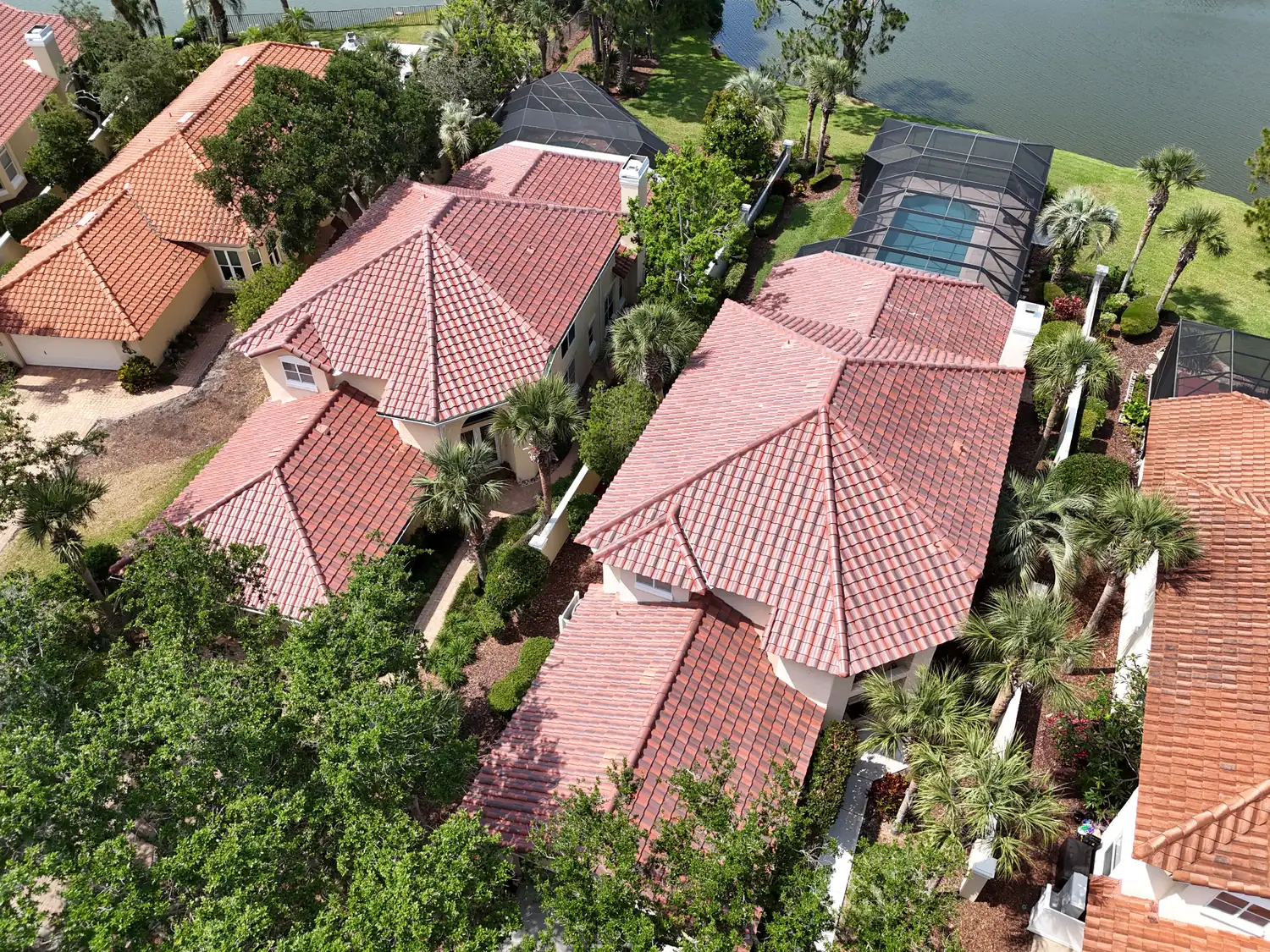
The tile is not what keeps water out of your house. Tile sheds most of the weather and protects what is beneath it, but the waterproof layer is the underlayment fastened or bonded to the wood deck below, and on most Florida homes that layer wears out long before the tile does. A tile roof can leak with every tile in perfect condition, which is why a leak on a tile roof is almost always an underlayment question rather than a tile question.
What is actually keeping water out of a tile roof?
Two separate systems are working over your head. The tile is the armor. It takes the sun, the wind and the impact, and it sheds the bulk of the rain. Under it sits the underlayment, a waterproof membrane attached to the wood deck, and that membrane is the roof as far as water is concerned. Wind-driven rain gets under tile routinely. It is designed to. The membrane is what sends that water to the gutter instead of your ceiling.
That is why a stain on the ceiling of a tile-roofed house tells you almost nothing about the tile, and why walking the roof looking for cracked pieces can miss the problem entirely.
Why does the underlayment wear out long before the tile does?
Concrete and clay tile can last half a century or more. The membrane under it bakes at attic temperatures every summer, takes salt air at the edges near the coast, and ages the way any asphalt-based or synthetic product ages. On most Florida tile roofs the underlayment reaches the end of its life decades before the tile does. When a tile roof “fails,” this is usually what failed.
Can my existing tile come off and go back on?
Often, yes. The job is called a re-lay: the tile comes off, the old underlayment comes off, a new system goes down, and your tile goes back. Two things decide whether it makes sense. First, breakage. Older tile gets brittle, and a re-lay always loses a percentage coming off. Second, matching. If your profile or color is no longer manufactured, the replacement pieces are a hunt, and a straight answer about where they come from belongs in the estimate before work starts, not in your driveway mid-job.
Why can they not use the same underlayment they use on a shingle roof?
Because tile is its own system. The membrane under tile carries different approvals, handles heat differently, and works with the way the tile is attached. The tile itself carries a Florida product approval that spells out how it must be fastened. A tile roof rebuilt on the wrong membrane looks finished on day one and repeats this whole conversation years ahead of schedule.
What should a tile estimate name in writing?
Four things, before anyone touches the roof: the underlayment system by name, how the tile will be attached, the breakage rate the bid assumes and who covers replacements past it, and where replacement tile is coming from if your profile is discontinued. An estimate that leaves any of those soft is not a cheaper roof. It is a number that has not finished being written.
Three questions to ask any contractor about a tile roof
First: are you telling me the tile failed or the underlayment failed, and how did you determine which? Second: what underlayment system are you putting under my tile, by name, in writing? Third: what breakage rate does the bid assume, and what happens if the count runs past it? A roofer who does tile work answers all three without looking anything up.
How AK handles tile on the coastal side of Flagler and Volusia
We do tile across the coastal side of Flagler and Volusia, and the answers to every question above go in writing with the estimate: the system named, the attachment method, the breakage assumption, and the sourcing plan for your profile. Our roofer walks the roof, prices it on site, and you have a firm written price with photos before he leaves. If the honest answer is that your underlayment has years left and you need a repair, that is the answer you get.
If there is a stain on your ceiling and perfect-looking tile over it, you now know more than most of the people who will quote the job. The visit costs nothing and produces a written estimate with photos. If what you need is a signed condition report for an insurance company, a closing, or a purchase, that is a paid inspection and we will tell you the price up front.
Licensed CCC1331606 · Owens Corning Platinum Preferred · a roofer answers 7 to 7, Monday through Saturday.
